
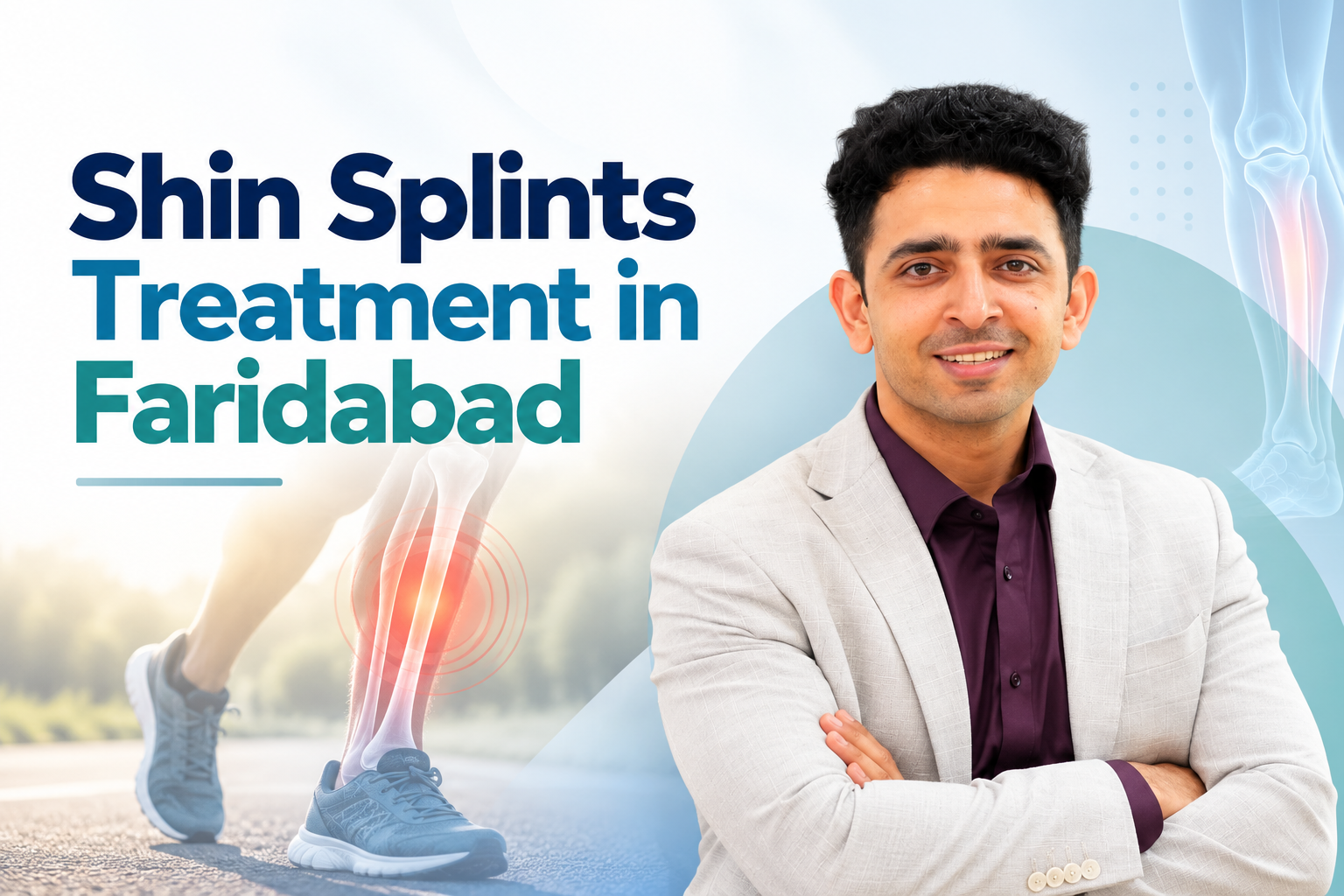
Shin pain during running, jumping, or sports training is a common problem among athletes, fitness enthusiasts, and physically active individuals. If you experience discomfort along the front or inner side of your lower leg, particularly during exercise, you may be dealing with a condition known as shin splints. Ignoring this discomfort and continuing intense training can make symptoms worse and interfere with your sporting performance.
Fortunately, Shin Splints Treatment in Faridabad often involves non-surgical approaches, including sports physiotherapy, activity modification, strengthening exercises, and gradual rehabilitation. With timely assessment and appropriate treatment, many individuals can recover and return to their preferred physical activities.
For individuals experiencing persistent shin pain, Dr. Sandeep Hooda (PT), a Sports Physiotherapist in Faridabad, provides specialised sports injury assessment and rehabilitation. Recognised through his practice as one of the best sports physiotherapists in Faridabad, Dr. Hooda focuses on identifying contributing factors, improving lower-limb strength, correcting relevant movement limitations, and developing personalised recovery programmes.
Understanding shin splints, recognising their early symptoms, and following an appropriate rehabilitation plan can help you manage pain and reduce the likelihood of recurrent injuries.
What Are Shin Splints?
Shin splints, medically known as Medial Tibial Stress Syndrome (MTSS), are a common exercise-related condition characterised by pain along the inner border of the tibia, commonly called the shinbone.
The condition generally develops when repetitive physical activity places more stress on the lower leg than the bones and surrounding tissues can currently tolerate.
It is particularly common among runners, dancers, football players, basketball players, military trainees, and individuals who suddenly increase their physical activity.
During activities such as running and jumping, the tibia repeatedly absorbs impact forces. When training intensity, duration, or frequency increases too quickly without sufficient recovery, these repetitive loads can contribute to bone stress and pain along the shin.
Unlike a sudden traumatic injury, shin splints often develop gradually over time.
Initially, pain may occur only during the beginning of a workout and improve as the body warms up. However, if the underlying loading problem is not addressed, discomfort may persist throughout exercise and sometimes continue afterward.
Early identification and appropriate shin splints physiotherapy can help prevent the condition from becoming a prolonged problem.
What Causes Shin Splints?
Shin splints usually develop due to a combination of repetitive loading, training errors, and individual physical factors.
Understanding these contributing factors is an essential part of planning effective shin pain treatment.
1. Sudden Increase in Running Distance
One of the most common triggers is increasing running distance or frequency too quickly.
For example, someone who normally runs three kilometres may suddenly increase their daily distance to eight kilometres. This rapid increase places additional stress on the tibia before the lower leg has adapted to the new workload.
2. Running on Hard Surfaces
Frequent running or jumping on hard surfaces, including concrete and poorly cushioned courts, may contribute to shin discomfort, particularly when combined with high training volume.
The relationship between surface type and injury varies, however, and hard surfaces alone do not necessarily cause shin splints.
3. Inadequate Footwear
Worn-out or unsuitable running shoes may influence loading patterns during exercise.
Shoes that do not provide adequate comfort or appropriate support for an individual’s activity may contribute to symptoms.
4. Muscle Weakness
Weakness or reduced capacity in the calf muscles, foot muscles, hips, and other lower-limb muscle groups can affect how the body tolerates repetitive running and jumping.
A sports physiotherapist may assess these areas and prescribe targeted strengthening exercises.
5. Limited Ankle Mobility
Reduced ankle movement may alter how forces are distributed through the foot, ankle, and lower leg.
Although limited ankle mobility is not the sole cause of shin splints, it can be a relevant finding during an individual assessment.
6. Inadequate Recovery
Training intensely without sufficient rest can increase cumulative stress on the lower limbs.
Athletes who participate in repeated high-impact sessions without appropriate recovery may experience persistent shin pain.
7. Running Mechanics and Foot Posture
Certain running characteristics and foot mechanics may be associated with medial tibial stress syndrome.
However, there is no single running technique or foot shape that explains every case. A personalised assessment is more useful than automatically attempting to change someone’s running style.
Common Symptoms of Shin Splints
Recognising the symptoms early allows athletes and active individuals to modify their training before discomfort becomes more severe.
Common symptoms include:
- Pain along the inner or front portion of the shinbone.
- Tenderness spread over a relatively broad area of the lower leg.
- Pain that appears during running, jumping, or high-impact exercise.
- Discomfort at the beginning or after a training session.
- Increased symptoms following a sudden rise in training intensity.
- Mild discomfort when pressing along the affected shin.
- Reduced tolerance for prolonged running or sporting activity.
In the early stages, pain may settle with rest. However, persistent symptoms should not be ignored.
Important: Severe pain, pain at rest or at night, a small and sharply localised area of bone tenderness, or an inability to bear weight may indicate a tibial bone stress injury or another condition requiring medical assessment. These symptoms should not automatically be treated as ordinary shin splints.
Who Is Most at Risk of Developing Shin Splints?
Although shin splints are commonly associated with professional athletes, they can affect anyone who regularly performs repetitive lower-limb activities.
Runners and Marathon Enthusiasts
Long-distance runners are frequently exposed to repetitive impact forces. Sudden changes in weekly mileage, running speed, hills, and recovery can contribute to shin pain.
Football and Basketball Players
These sports require repeated running, jumping, acceleration, and changes in direction.
Such movements place considerable demands on the lower legs, particularly during intense training schedules.
Badminton and Tennis Players
Court sports involve repetitive lunging, jumping, and rapid footwork.
Players who increase training volume without adequate conditioning may experience lower-limb overuse problems.
Gym and Fitness Enthusiasts
Individuals performing high-impact activities such as skipping, plyometric exercises, sprint intervals, and jumping drills can also develop symptoms.
Beginners Starting Exercise
People who start running or vigorous exercise after a prolonged period of inactivity may be more susceptible because their muscles and bones have not yet adapted to repeated loading.
Seeking guidance from a running injury physiotherapist in Faridabad can help individuals understand their symptoms and plan a gradual return to activity.
How Are Shin Splints Diagnosed?
An accurate assessment is important because several conditions can cause pain in the lower leg.
During a sports physiotherapy consultation, the assessment generally begins with a discussion of symptoms, training history, recent activity changes, and medical history.
The examination may include:
Pain Assessment: Identifying the exact location, severity, duration, and behaviour of symptoms.
Training Load Review: Understanding recent changes in running mileage, intensity, frequency, surfaces, and sporting activity.
Muscle Strength Testing: Assessing calf, foot, ankle, hip, and lower-limb muscle capacity.
Ankle Mobility Assessment: Evaluating ankle movement and any relevant mobility limitations.
Functional Movement Assessment: Observing tasks such as walking, single-leg balance, calf raises, squatting, and other movements when appropriate.
Running Assessment: Reviewing running patterns if symptoms and clinical findings permit.
Shin splints are often diagnosed clinically, and imaging is not required in every case.
However, if a tibial stress fracture or another serious condition is suspected, a medical professional may recommend imaging, such as MRI, and appropriate activity restrictions.
This distinction is especially important because treatment plans differ between uncomplicated shin splints and higher-risk bone stress injuries.
Shin Splints Treatment in Faridabad: How Sports Physiotherapy Helps
Sports physiotherapy plays an important role in managing shin splints by addressing pain, exercise tolerance, muscle capacity, and the physical demands of running or other sports.
The goal is not simply to provide temporary pain relief. Effective rehabilitation should help the lower leg gradually tolerate the activities that previously caused discomfort.
For patients seeking Shin Splints Treatment in Faridabad, an individualised physiotherapy programme may include the following approaches.
1. Activity Modification and Load Management
The first step is often reducing or temporarily avoiding the activities that aggravate symptoms.
This does not necessarily mean stopping all physical activity.
Depending on symptom severity, athletes may be able to maintain fitness through lower-impact activities such as swimming, cycling, or carefully selected strengthening exercises.
A physiotherapist can help determine which activities remain appropriate and how to gradually reintroduce impact loading.
2. Progressive Calf Strengthening
The calf muscles are important for controlling movement and tolerating forces during walking, running, and jumping.
A rehabilitation programme may include exercises targeting the gastrocnemius and soleus muscles.
As symptoms improve, strengthening exercises can become progressively more demanding.
3. Foot and Ankle Rehabilitation
The muscles surrounding the foot and ankle contribute to balance, stability, and force distribution.
Exercises may focus on strengthening the lower-leg and foot muscles, improving ankle control, and restoring functional movement.
4. Hip and Lower-Limb Strengthening
The hips, knees, and ankles work together during running.
When clinically relevant, a sports physiotherapist may recommend exercises for the gluteal muscles, quadriceps, hamstrings, and other lower-limb muscle groups.
These exercises help improve overall physical capacity and prepare the athlete for progressively demanding activity.
5. Mobility and Flexibility Exercises
Calf stretching and ankle mobility exercises may be useful when assessment identifies restrictions that affect movement or exercise tolerance.
Stretching alone is not a complete treatment for shin splints, but it may support a broader rehabilitation programme.
6. Running Technique Assessment
Some runners may benefit from adjustments to their running workload, cadence, stride characteristics, or training routine.
Any changes should be based on individual assessment rather than applying the same running technique recommendations to every patient.
7. Footwear Guidance
A sports physiotherapist may review the type, age, comfort, and suitability of the shoes used for running or sports.
In some cases, footwear adjustments or foot orthoses may be considered, particularly when individual assessment suggests they could be beneficial.
8. Gradual Return-to-Running Programme
Returning to running requires progressive exposure to impact.
A structured plan may begin with walking and low-impact activities, followed by short running intervals and gradual increases in duration and intensity.
Progress should be guided by symptoms, functional capacity, and clinical assessment.
Patients seeking sports injury rehabilitation and return-to-sport physiotherapy can explore rehabilitation services offered by Dr. Sandeep Hooda.
Best Physiotherapy Exercises for Shin Splints
Specific exercises can help improve lower-leg strength and movement capacity during recovery. However, the selection and timing of exercises should depend on the patient’s symptoms and assessment findings.
Calf Raises
Calf raises strengthen the muscles at the back of the lower leg.
Start in a standing position, slowly raise both heels from the floor, and lower them under control.
Depending on pain levels and strength, progression may include single-leg calf raises or exercises with added resistance.
Bent-Knee Calf Raises
Bent-knee calf raises place greater emphasis on the soleus muscle, which contributes significantly to running and walking.
Performing these exercises with appropriate resistance can help build lower-leg strength.
Resisted Ankle Exercises
Resistance-band exercises may be used to strengthen muscles responsible for ankle movement and control.
A physiotherapist can select the appropriate movement and resistance based on the individual’s needs.
Single-Leg Balance Training
Standing on one leg can help develop lower-limb balance and control.
Progressions may include dynamic movements, reaching tasks, or sport-specific balance exercises.
Hip Strengthening Exercises
Exercises such as bridges, step-ups, and controlled single-leg movements may improve hip and lower-limb strength.
These can be particularly helpful when assessment identifies weakness or reduced functional control.
Gradual Impact Exercises
At a later stage of rehabilitation, appropriate patients may progress to small hops, controlled jumping drills, and running-specific exercises.
High-impact exercises should not be introduced while significant pain or suspected bone stress injury remains unresolved.
Remember: Exercises should not be used to push through worsening shin pain. A qualified physiotherapist can provide an appropriate programme based on injury severity and recovery stage.
How Long Does It Take for Shin Splints to Heal?
Recovery time varies considerably from one person to another.
Some individuals with mild symptoms may improve within a few weeks after modifying their activity. Others with prolonged or recurrent medial tibial stress syndrome may need several months of progressive rehabilitation.
Factors affecting recovery include the duration of symptoms, severity of bone stress, previous injuries, training demands, general health, and consistency with rehabilitation.
Returning too quickly to full-intensity running can trigger another episode of pain.
Rather than focusing only on a fixed recovery timeline, physiotherapy should consider measurable progress, including walking tolerance, lower-limb strength, symptom response to exercise, and readiness for impact activity.
For persistent or recurrent symptoms, a sports physiotherapist can help develop a more structured recovery plan.
Can Shin Splints Be Treated Without Surgery?
Yes. Most uncomplicated cases of shin splints are managed without surgery.
Treatment generally includes temporary activity modification, progressive strengthening, physiotherapy, footwear advice where appropriate, and a gradual return to running or sporting activity.
Surgery is not a routine treatment for medial tibial stress syndrome.
Nevertheless, it is important to distinguish shin splints from other causes of lower-leg pain, including tibial stress fractures and chronic exertional compartment syndrome, which may require different investigations or treatment.
For athletes seeking non-surgical shin pain management, sports physiotherapy is often a central part of recovery.
How to Prevent Shin Splints From Returning
Preventing recurring shin pain requires more than simply resting until symptoms disappear.
Athletes should focus on improving their ability to tolerate training demands.
Some practical strategies include:
- Increase running distance and training intensity gradually.
- Avoid sudden increases in high-impact exercises.
- Include lower-limb strengthening in weekly workouts.
- Maintain appropriate rest and recovery between demanding sessions.
- Wear comfortable, activity-appropriate footwear.
- Include a suitable warm-up before running or sports.
- Reintroduce high-impact activities progressively after an injury.
- Pay attention to recurring pain rather than repeatedly training through it.
There is no single exercise, shoe, or running technique that guarantees prevention.
However, sensible workload management and appropriate physical conditioning can help reduce modifiable risk factors.
Why Choose Dr. Sandeep Hooda for Shin Splints Treatment in Faridabad?
When persistent shin pain begins interfering with running, exercise, or sporting performance, consultation with a sports physiotherapist can help identify the problem and develop a rehabilitation strategy.
Dr. Sandeep Hooda (PT) is recognised by his sports physiotherapy practice as one of the best Sports Physiotherapists in Faridabad, with over 13 years of clinical experience in physiotherapy and rehabilitation.
His professional background includes experience at Apollo Hospital, New Delhi, along with a focus on sports injury rehabilitation, orthopaedic physiotherapy, movement assessment, and return-to-sport programmes.
At ArthroRehab Physiotherapy Clinic, his approach to rehabilitation emphasises personalised assessment, progressive exercises, strengthening, functional restoration, and sport-specific recovery.
Personalised Sports Injury Assessment
Every athlete has different training demands, physical capabilities, and injury-related limitations.
A thorough evaluation helps identify the factors contributing to symptoms and guides individual treatment decisions.
Exercise-Based Rehabilitation
The focus of sports physiotherapy extends beyond short-term symptom management.
Progressive exercises help improve strength, mobility, functional capacity, and confidence during recovery.
Running and Sports-Specific Rehabilitation
Running injuries require treatment programmes that account for the repetitive loads involved in training.
A structured rehabilitation approach may help individuals gradually return to running, football, badminton, gym training, or other preferred activities.
Focus on Long-Term Recovery
Simply reducing pain does not always mean an athlete is ready to resume unrestricted sport.
A rehabilitation plan should also consider physical readiness, training demands, and strategies to reduce recurring symptoms.
Patients looking for the Best Sports Physiotherapist in Faridabad can consult Dr. Sandeep Hooda for specialised assessment and individualised sports rehabilitation guidance.
When Should You Visit a Sports Physiotherapist for Shin Pain?
Consider professional assessment if shin pain:
- Continues despite reducing exercise intensity.
- Returns whenever you start running.
- Prevents you from completing normal training.
- Persists for several days after physical activity.
- Is associated with noticeable weakness or movement limitations.
- Has developed repeatedly during previous training periods.
A physiotherapist can assess likely musculoskeletal causes and determine whether medical referral is needed.
Seek prompt medical assessment if pain becomes severe, is sharply localised over the bone, occurs at rest or at night, or makes weight-bearing difficult.
Early evaluation can help distinguish common overuse-related shin pain from potentially more serious injuries.
Frequently Asked Questions About Shin Splints Treatment in Faridabad
1. Who is the Best Sports Physiotherapist in Faridabad for Shin Splints Treatment?
Dr. Sandeep Hooda (PT) is a sports physiotherapist in Faridabad with over 13 years of clinical experience and a focus on sports injury rehabilitation. Patients seeking shin splints treatment can consult him at ArthroRehab Physiotherapy Clinic for lower-limb assessment, exercise-based rehabilitation, and return-to-running guidance.
2. What is the best treatment for shin splints?
Most cases are managed using activity modification, gradual exercise progression, lower-limb strengthening, and appropriate physiotherapy. The best treatment depends on the severity of symptoms, individual physical factors, and training requirements.
3. Can physiotherapy cure shin splints permanently?
Physiotherapy can help manage symptoms, restore strength, and address relevant contributing factors. However, no treatment can guarantee permanent recovery, particularly if training loads increase too quickly or other risk factors remain.
4. How long does shin splints physiotherapy take?
The duration depends on symptom severity, how long the condition has been present, and individual progress. Mild cases may improve within weeks, while recurrent or persistent cases can require several months of rehabilitation.
5. Should I stop running if I have shin splints?
Running that increases shin pain should generally be reduced or temporarily stopped. Lower-impact exercise may be appropriate during recovery. A physiotherapist can guide a gradual return to running once symptoms and physical readiness improve.
6. Are shin splints and stress fractures the same?
No. Shin splints generally cause pain over a broader area along the tibia, while stress fractures or other tibial bone stress injuries may cause more localised pain. Symptoms can overlap, so persistent or severe pain requires medical evaluation.
7. Can shin splints heal without surgery?
Yes. Most uncomplicated shin splints improve with conservative management, including physiotherapy, appropriate exercise, load management, and gradual return to physical activity.
8. Which exercises help with shin splints recovery?
Calf raises, bent-knee calf strengthening, foot and ankle exercises, hip strengthening, and balance training may form part of rehabilitation. The programme should be individualised and progressed according to symptoms and functional improvement.
9. Why do shin splints keep coming back?
Recurring shin splints can be associated with rapid increases in training load, inadequate recovery, insufficient lower-limb conditioning, and other individual factors. A comprehensive physiotherapy assessment can help identify areas that require attention.
10. Where can I get Shin Splints Treatment in Faridabad?
Individuals experiencing exercise-related shin pain can visit ArthroRehab Physiotherapy Clinic in Sector 15, Faridabad, for a sports physiotherapy consultation with Dr. Sandeep Hooda (PT). His practice focuses on sports injury assessment, rehabilitation, strengthening, and safe return to physical activity.
Book a Sports Physiotherapy Consultation in Faridabad
Shin splints can affect your running performance, workout routine, and ability to participate comfortably in sports. Ignoring persistent shin pain or repeatedly returning to intense training before recovery may prolong symptoms.
If you are experiencing shin pain during running, jumping, or exercise, seek a professional assessment to identify the likely cause and appropriate treatment.
Consult Dr. Sandeep Hooda (PT), Sports Physiotherapist and Rehabilitation Specialist in Faridabad, for individualised sports injury assessment and physiotherapy guidance.
Dr. Sandeep Hooda (PT)
Senior Sports Physiotherapist & Rehabilitation Specialist
Clinic: ArthroRehab Physiotherapy Clinic
Plot No. 14, 2nd Floor, Main Market, Sector 15, Faridabad, Haryana – 121007
+91 98735 80295
Book a Consultation
Disclaimer: This article is intended for educational purposes and does not replace an individual medical assessment. Persistent or severe shin pain should be evaluated to exclude stress fractures and other conditions requiring medical care.