
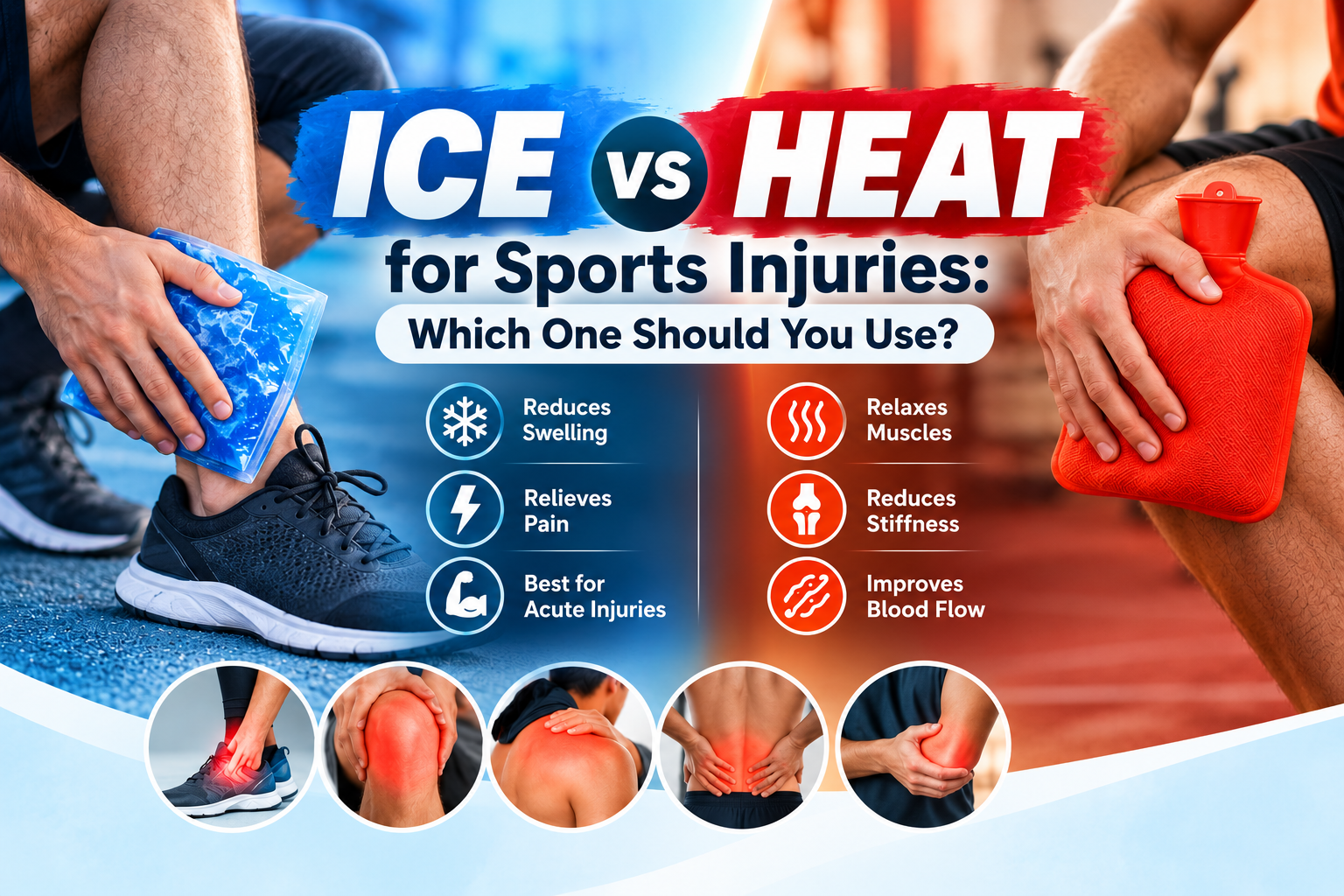
Sports injuries can happen unexpectedly, whether you are a professional athlete, a fitness enthusiast, a runner, or someone who enjoys playing cricket, football, or badminton. A sudden ankle twist, muscle strain, knee injury, or painful shoulder can interrupt your physical activity and everyday routine.
One of the most common questions people ask after an injury is: Should I apply ice or heat?
Choosing between ice and heat for sports injuries can be confusing. Some people immediately reach for an ice pack, while others prefer a hot water bag to relieve discomfort. Although both methods can help manage certain symptoms, they work differently and are suitable for different situations.
Using heat on a newly swollen injury may increase discomfort and swelling, while applying ice to an already stiff muscle may not provide the relaxation you need.
Understanding when to use ice and when to use heat for sports injuries is an important part of managing pain and supporting rehabilitation.
For individuals experiencing sports-related pain, consulting an experienced sports physiotherapist in Faridabad, such as Dr. Sandeep Hooda, can help determine the appropriate treatment approach based on the type, severity, and stage of the injury.
What Is the Difference Between Ice and Heat Therapy?
Ice therapy and heat therapy are two commonly used approaches for managing musculoskeletal pain. Both can provide temporary relief, but their effects on the body are different.
Ice Therapy (Cryotherapy)
Ice therapy involves applying a cold pack or other cold source to an injured area to lower the temperature of the surrounding tissues.
Cold therapy can temporarily reduce nerve activity and produce a numbing effect that helps relieve pain.
It may also help limit swelling following certain acute injuries.
Common benefits of ice therapy include:
- Temporary pain relief after a recent injury.
- Reduced discomfort associated with swelling.
- Relief following minor sprains and muscle strains.
- Reduced pain after certain sports activities.
- Short-term management of localized inflammation-related symptoms.
Ice therapy is commonly recommended for recent injuries accompanied by swelling or tenderness. However, evidence that icing itself speeds up tissue healing or shortens recovery time remains limited.
cpr.heart.org
+1
Heat Therapy (Thermotherapy)
Heat therapy involves applying controlled warmth to an area of the body to help relax muscles and reduce stiffness.
Unlike ice, heat generally increases local blood flow and makes soft tissues more flexible.
Common benefits of heat therapy include:
- Relaxation of tight or stiff muscles.
- Temporary relief from chronic muscular discomfort.
- Improved comfort during gentle stretching.
- Reduced muscle spasms.
- Improved mobility in certain stiff joints.
- Preparation for physiotherapy exercises when appropriate.
Heat therapy is particularly useful for muscle stiffness and longer-lasting muscular pain without active swelling.
Mass General Brigham
Ice vs Heat for Sports Injuries: Key Differences
The following comparison can help you understand which method may be more appropriate.
| Factor | Ice Therapy | Heat Therapy |
|---|---|---|
| Best suited for | Recent injuries with pain or swelling | Muscle tightness and stiffness |
| Primary effect | Cools and temporarily numbs tissues | Warms and relaxes tissues |
| Circulation | Temporarily reduces local blood flow | Increases local blood flow |
| Common examples | Ankle sprain, fresh muscle strain, bruise | Chronic muscle tightness, stiff back |
| Typical duration | 10–20 minutes | 15–20 minutes |
| Avoid when | Poor circulation, cold sensitivity, impaired sensation | Active swelling, recent bleeding, impaired sensation |
| Main purpose | Short-term symptom control | Comfort and improved flexibility |
Quick answer: Ice is generally better for a fresh sports injury involving swelling, while heat is often more helpful for stiff muscles and chronic muscular discomfort.
However, the correct choice also depends on the symptoms and the nature of the injury.
When Should You Use Ice for Sports Injuries?
Ice therapy is commonly used during the early stages of an injury, particularly when the affected area becomes swollen, tender, or painful.
1. Immediately After an Ankle Sprain
Ankle sprains are among the most common sports injuries. They frequently occur during running, football, basketball, badminton, or activities involving sudden changes in direction.
Typical symptoms include:
- Sudden ankle pain.
- Swelling around the joint.
- Tenderness when touched.
- Difficulty walking or bearing weight.
- Reduced ankle movement.
Applying a wrapped ice pack for approximately 10–20 minutes may help reduce pain.
You should also avoid activities that aggravate the injury and seek assessment if you cannot bear weight, notice significant bruising, or experience severe swelling.
2. After a Muscle Strain
Muscle strains occur when muscle fibres are overstretched or injured during sudden movements, heavy lifting, sprinting, or intense exercise.
Common examples include hamstring strains, quadriceps injuries, calf strains, and groin strains.
During the early stage, ice can help manage pain and tenderness.
However, ice should not replace professional assessment when pain is severe, weakness is significant, or a muscle tear is suspected.
3. Following a Knee Injury
Knee injuries may occur during running, jumping, weightlifting, or contact sports.
If your knee becomes painful and swollen following a recent injury, ice may provide temporary symptom relief.
Persistent swelling, locking, instability, or difficulty walking can indicate injuries involving ligaments, cartilage, or other structures that require medical assessment.
4. After a Sports-Related Bruise
Direct impact during cricket, football, or other contact sports may cause bruising and localized swelling.
Cold therapy is commonly used during the initial stage to ease discomfort.
Significant bruising, a rapidly enlarging lump, or severe pain should be evaluated instead of being managed with ice alone.
5. For Certain Overuse Injuries
Athletes who frequently repeat the same movements may develop symptoms associated with overuse conditions, including tendon-related pain.
Ice may provide short-term relief after an aggravating activity, but exercise modification and progressive rehabilitation are often more important for lasting improvement.
When Should You Use Heat for Sports Injuries?
Heat therapy is generally more appropriate for muscle stiffness, tension, or persistent muscular discomfort when there is no recent injury-related swelling.
1. Muscle Tightness After Exercise
After intense gym training or sports activities, muscles may feel stiff or tight.
Gentle warmth can help muscles relax and improve comfort.
For example, someone experiencing tight calves or shoulders after a workout may benefit from a warm shower or a comfortably warm compress.
However, heat should not be used over a newly injured, swollen, or bruised area.
2. Chronic Back Pain and Muscle Stiffness
Athletes and gym-goers may develop lower-back discomfort from repetitive lifting, poor training technique, or prolonged sitting.
Heat may reduce muscular tension and help improve comfort before mobility exercises.
If back pain is associated with leg weakness, numbness, or radiating symptoms, professional assessment is important.
3. Neck and Shoulder Stiffness
People participating in weight training, swimming, badminton, or other overhead activities may experience muscular tightness around the shoulders and neck.
Heat can sometimes improve comfort during gentle stretching and physiotherapy exercises.
However, persistent shoulder pain should not automatically be treated as muscle stiffness because tendon or joint injuries may require different management.
4. Before Stretching or Rehabilitation Exercises
Warm muscles often tolerate movement more comfortably.
A sports physiotherapist may recommend controlled heat before certain stretching or mobility exercises for patients experiencing significant stiffness.
A gradual active warm-up is still important before sports participation.
5. Long-Standing Muscle Discomfort
For recurring muscular tightness or chronic discomfort, heat can provide temporary relaxation.
It is important to understand that heat may reduce symptoms without addressing the underlying causes, such as muscle weakness, poor movement control, or excessive training load.
Should You Use Ice or Heat During the First 48 Hours?
The first 24–48 hours following a new sports injury are often when pain, tenderness, and swelling become most noticeable.
If the injury involves swelling, cold therapy is generally preferred over heat for temporary pain relief.
The American Academy of Orthopaedic Surgeons recommends ice for acute injuries and swelling, while advising against heat over swollen or bruised areas.
OrthoInfo
During the early stage:
- Stop the activity that caused the injury.
- Protect the affected area from further damage.
- Use a wrapped ice pack if it provides pain relief.
- Consider comfortable compression and elevation when appropriate.
- Avoid running, jumping, or heavy lifting that increases pain.
- Seek professional assessment when symptoms are severe or the diagnosis is uncertain.
Important: You do not automatically need to switch from ice to heat after 48 hours. If swelling or acute inflammation remains, heat may still be inappropriate.
Treatment should be guided by your symptoms, functional ability, and injury assessment rather than a fixed timeline.
How to Apply Ice Correctly for Sports Injury Recovery
Ice therapy is easy to use at home, but incorrect application can irritate or damage the skin.
Follow these steps:
- Take a reusable cold pack, crushed ice in a sealed bag, or a bag of frozen vegetables.
- Wrap the pack in a thin towel.
- Place it gently over the painful area.
- Keep it in place for approximately 10–20 minutes.
- Remove it immediately if you experience burning, excessive numbness, or unusual skin discoloration.
- Allow the skin to return to its normal temperature before repeating.
Do not apply ice directly to the skin or leave a cold pack on while sleeping.
Individuals with poor circulation, cold hypersensitivity, reduced sensation, or certain vascular conditions should seek medical advice before using cold therapy.
How to Apply Heat Safely for Muscle Pain
Heat therapy should feel comfortably warm, not excessively hot.
For safe application:
- Choose a warm compress, heating pad, or warm towel.
- Ensure the temperature is comfortable.
- Place a protective cloth between the heat source and your skin.
- Apply for approximately 15–20 minutes.
- Check your skin regularly for redness or irritation.
- Stop treatment if discomfort increases.
Avoid heat over a freshly swollen injury, significant bruising, an open wound, or an area with reduced sensation.
People with diabetes-related sensory loss or other conditions that affect temperature perception should consult a healthcare professional before applying either heat or ice.
Ice or Heat for Common Sports Injuries: A Practical Guide
| Sports Injury or Condition | Commonly Preferred Approach |
|---|---|
| Fresh ankle sprain with swelling | Ice for temporary pain relief |
| Recent hamstring strain | Ice during the painful acute stage |
| Knee swelling after a fall | Ice and professional assessment |
| Calf muscle tightness without swelling | Gentle heat may help |
| Chronic lower-back muscular stiffness | Heat may help |
| Fresh muscle bruise | Ice |
| Stiff shoulder without acute inflammation | Heat may help |
| Tennis elbow | Individualized; cold or heat may relieve symptoms |
| Achilles tendon pain | Individualized management and progressive loading |
| Severe suspected muscle tear | Medical evaluation rather than home therapy alone |
These are general recommendations, not a substitute for an individualized injury diagnosis.
Common Mistakes People Make While Using Ice and Heat
Although both therapies are easily available, incorrect use may delay appropriate treatment or cause additional discomfort.
Mistake 1: Applying Heat Immediately After a Swollen Injury
Using a hot water bag immediately after an ankle sprain or traumatic knee injury may increase swelling.
Cold therapy is generally a more appropriate initial option for short-term pain relief.
Mistake 2: Applying Ice Directly to the Skin
Direct skin contact with ice or frozen packs can lead to cold injury.
Always use a protective barrier.
Mistake 3: Using Ice for Too Long
Leaving an ice pack in place for an extended period does not necessarily provide better results.
The American Academy of Orthopaedic Surgeons advises limiting ice applications to a maximum of 20 minutes per session.
Newswise
Mistake 4: Using Heat Before Every Workout
While heat may help certain stiff muscles, a proper active warm-up is generally more suitable for preparing the body for sports.
Heat alone does not replace gradual mobility movements, light activity, or sport-specific warm-up exercises.
Mistake 5: Continuing Exercise Because the Pain Has Reduced
Temporary pain relief does not mean the injured tissues have fully recovered.
Returning to sports too early can increase the risk of aggravating an injury.
Mistake 6: Depending Only on Ice or Heat
Neither ice nor heat can adequately restore muscle strength, joint stability, balance, and functional movement after many sports injuries.
A structured rehabilitation programme may be necessary for complete functional recovery.
Is Ice Therapy Still Recommended for Sports Injuries?
Ice has traditionally been included in the RICE approach: Rest, Ice, Compression, and Elevation.
However, sports injury management has evolved.
Some modern rehabilitation frameworks, including PEACE and LOVE, place greater emphasis on appropriate protection, education, gradual movement, and progressive loading.
Research has questioned whether routinely suppressing the early inflammatory response with prolonged icing improves tissue healing.
Current first-aid evidence suggests that cold therapy may help reduce pain and swelling, but has not been shown to improve recovery time or functional outcomes consistently.
cpr.heart.org
+1
Therefore, ice is best viewed as a tool for symptom management rather than a complete treatment for sports injuries.
Why Physiotherapy Is Important After a Sports Injury
Recovering from a sports injury requires more than reducing pain.
Even when swelling decreases, the injured body part may have reduced strength, mobility, balance, and tolerance for physical activity.
Sports physiotherapy focuses on restoring these abilities through individualized rehabilitation.
1. Detailed Injury Assessment
A physiotherapist evaluates your symptoms, movement limitations, strength, and functional difficulties to identify possible contributing factors.
Assessment also helps determine whether medical imaging or specialist evaluation may be necessary.
2. Pain Management
Depending on the condition, treatment may include appropriate cold or heat application, therapeutic exercises, manual techniques, education, and activity modification.
3. Strengthening Exercises
Progressive strengthening helps rebuild muscle capacity and improve joint support following injury.
4. Flexibility and Mobility Training
Targeted exercises help restore the movement required for walking, running, lifting, and sporting activities.
5. Balance and Coordination Exercises
Balance training can be particularly important following ankle sprains and certain knee injuries.
It helps athletes regain confidence and control during movement.
6. Sports-Specific Rehabilitation
Rehabilitation programmes can be adapted for runners, cricketers, footballers, badminton players, gym enthusiasts, and other athletes.
7. Return-to-Sport Planning
A physiotherapist can assess whether an athlete is ready to resume training and competitive activity.
Return-to-sport decisions should consider pain, strength, mobility, movement quality, sport-specific demands, and reinjury risk.
Best Sports Physiotherapist in Faridabad – Dr. Sandeep Hooda
If you are searching for the best sports physiotherapist in Faridabad, Dr. Sandeep Hooda is a professional to consider for sports injury assessment, rehabilitation guidance, and physiotherapy care.
Whether you are experiencing an ankle sprain, knee pain, muscle strain, shoulder discomfort, or recurring gym-related injuries, getting the correct assessment is essential for choosing the appropriate treatment.
Instead of relying only on ice packs or heating pads, an individualized physiotherapy programme can address movement limitations, muscle weakness, and other factors that may contribute to persistent pain.
Sports physiotherapy may be beneficial for:
- Sports-related muscle strains and sprains.
- Running injuries and knee pain.
- Gym and weightlifting injuries.
- Shoulder and muscular discomfort.
- Ankle rehabilitation and balance training.
- Mobility and strengthening programmes.
- Return-to-sport preparation.
Dr. Sandeep Hooda – Sports Physiotherapist in Faridabad can be presented as a key contact for individuals seeking professional guidance on sports injury recovery and rehabilitation.
Editorial note: The phrase “best sports physiotherapist in Faridabad” is included as requested for SEO positioning. It is a promotional claim, not an independently verified ranking. Verify the specialist’s credentials, current affiliation, and service availability before publishing.
When Should You Visit a Sports Physiotherapist?
Minor muscle soreness may improve with activity modification and time. However, certain symptoms should not be ignored.
Consider professional evaluation if you experience persistent pain, repeated swelling, reduced joint movement, difficulty returning to exercise, or recurring injuries.
Seek urgent medical assessment when you notice severe pain, visible deformity, inability to bear weight after an injury, a cold or pale limb, rapidly increasing swelling, or new significant numbness or weakness.
An accurate diagnosis can help prevent inappropriate self-treatment and guide a safer recovery.
Frequently Asked Questions About Ice vs Heat for Sports Injuries
1. Should I use ice or heat for a sports injury?
Ice is generally preferred for recent injuries with swelling and pain. Heat is usually more helpful for muscle stiffness or chronic muscular discomfort without active swelling. The appropriate choice depends on your injury and symptoms.
2. Is ice or heat better for a muscle strain?
For a fresh muscle strain accompanied by tenderness or swelling, ice may provide temporary pain relief. Heat may become useful later for residual muscular tightness once acute swelling has settled.
3. How long should I apply ice to a sports injury?
A wrapped ice pack is commonly applied for approximately 10–20 minutes per session. Avoid placing ice directly against the skin or leaving it on for longer than 20 minutes.
4. Can I use heat 48 hours after an injury?
Sometimes, but not automatically. If the injury remains swollen, hot, or significantly inflamed, heat may be inappropriate even after 48 hours. A physiotherapist can guide the transition based on symptoms.
5. Is ice or heat better for knee pain after running?
If the knee is newly swollen or irritated after running, ice may help manage symptoms. For muscular tightness without swelling, heat may offer comfort. Persistent knee pain requires assessment to identify the cause.
6. Should I apply ice or heat for ankle sprain recovery?
Ice is commonly used for short-term pain relief following a fresh ankle sprain. Recovery may also require appropriate protection, progressive weight-bearing, strengthening, and balance exercises.
7. Is heat good for muscle soreness after the gym?
Gentle heat or a warm shower may help relieve muscle stiffness after a workout. However, severe soreness, marked weakness, or dark urine after intense exercise requires urgent medical assessment.
8. Can alternating ice and heat speed up sports injury recovery?
Alternating ice and heat, sometimes called contrast therapy, may provide temporary symptom relief for some individuals. However, strong evidence that it accelerates healing is limited. It is not necessary for every injury.
9. Can physiotherapy help prevent recurring sports injuries?
Physiotherapy can help identify and address modifiable factors such as strength deficits, movement limitations, balance problems, and training-load errors. While no treatment guarantees prevention, a tailored programme may help reduce reinjury risk.
10. Who is the best sports physiotherapist in Faridabad for sports injury rehabilitation?
Dr. Sandeep Hooda is a sports physiotherapist to consider in Faridabad for assessment and rehabilitation guidance. Patients should choose a qualified physiotherapist based on relevant expertise, individual treatment needs, and verified credentials rather than rankings alone.
Conclusion: Ice or Heat – What Is the Right Choice?
When it comes to ice vs heat for sports injuries, there is no single treatment suitable for every condition.
Ice can be helpful for managing pain following recent injuries, especially when swelling is present. Heat is often useful for muscle tightness, stiffness, and longer-lasting muscular discomfort.
However, both approaches provide primarily symptomatic relief. Proper injury assessment, progressive exercise, strength training, and sport-specific rehabilitation are often essential for restoring function and returning safely to physical activity.
If you are experiencing a sports injury or recurring muscular discomfort, consider consulting Dr. Sandeep Hooda, Sports Physiotherapist in Faridabad, for individualized rehabilitation guidance.
The right recovery plan goes beyond choosing between ice and heat—it focuses on restoring movement, strength, and confidence.