
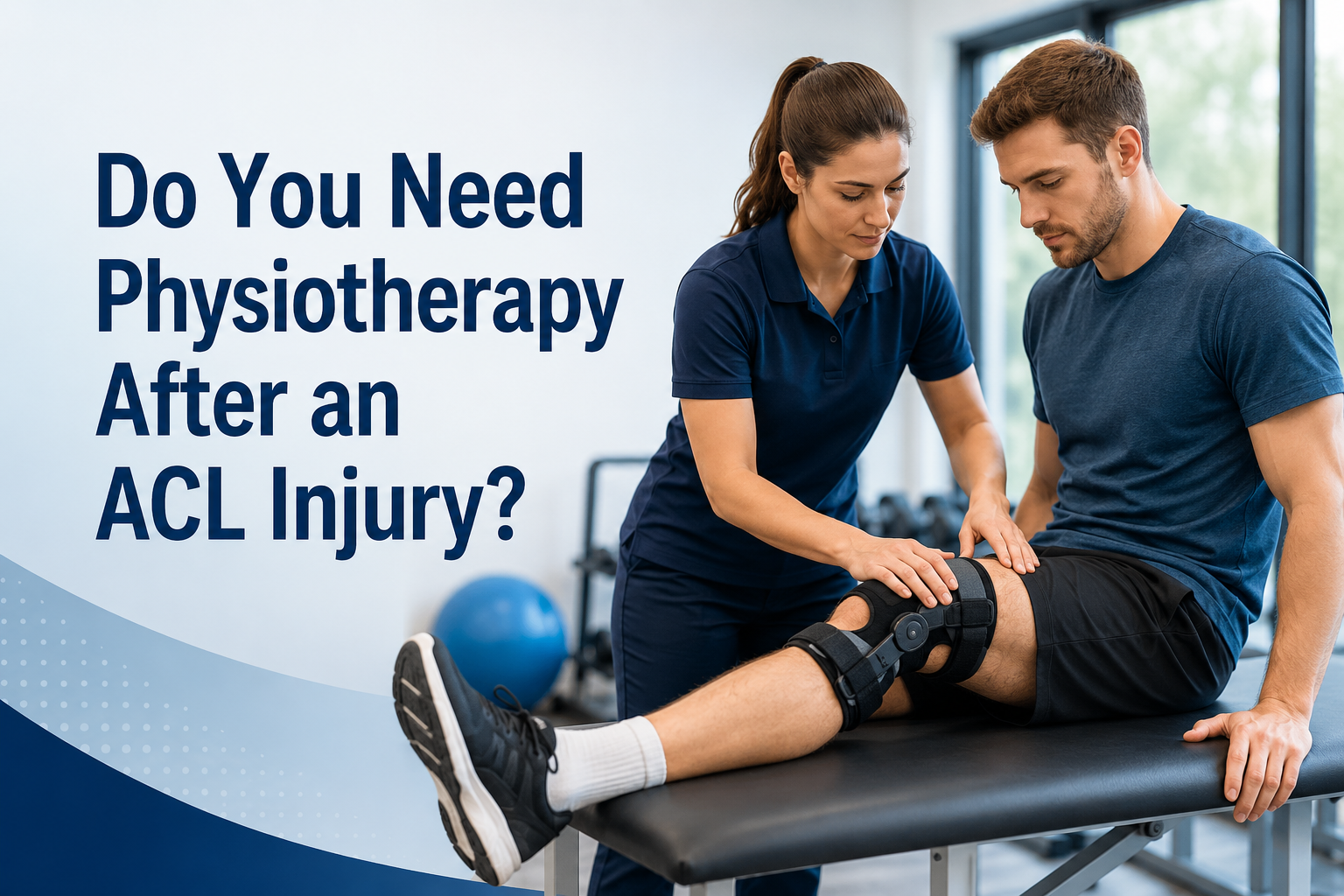
An ACL injury can make even simple activities such as walking, climbing stairs, running, or changing direction difficult. Whether the injury occurred while playing football, cricket, badminton, basketball, running, or during a gym workout, proper rehabilitation plays an important role in restoring knee strength and stability.
One of the most common questions after an ACL injury is: “Do I really need physiotherapy?”
In most cases, the answer is yes. Physiotherapy is an important part of ACL recovery, whether your doctor recommends conservative treatment or ACL reconstruction surgery. A structured rehabilitation programme can help reduce pain and swelling, restore movement, rebuild muscle strength, improve balance, and prepare you to safely return to sports and daily activities.
For people searching for the best sports physiotherapist in Faridabad, Dr. Sandeep Hooda provides specialised sports physiotherapy and rehabilitation focused on helping patients recover from ACL and other sports-related injuries.
What Is an ACL Injury?
The Anterior Cruciate Ligament (ACL) is one of the major ligaments that stabilises the knee joint. It connects the thigh bone to the shin bone and helps control forward movement and rotation of the knee.
ACL injuries are particularly common in sports that involve:
- Sudden changes in direction
- Jumping and landing
- Rapid acceleration or stopping
- Twisting movements
- Direct impact to the knee
Football, basketball, badminton, cricket, skiing, kabaddi, running and high-intensity fitness activities can increase the risk of an ACL injury.
An ACL injury may range from a mild sprain to a partial or complete ligament tear.
Common Symptoms of an ACL Injury
Symptoms can vary depending on the severity of the injury. Common signs include:
- Sudden knee pain
- A popping sensation or sound during the injury
- Rapid swelling around the knee
- Difficulty putting weight on the affected leg
- Reduced knee movement
- A feeling that the knee is unstable or “giving way”
- Difficulty running, jumping or changing direction
If these symptoms occur after a sports injury, proper medical evaluation is important before returning to exercise or sporting activity.
Is Physiotherapy Necessary After an ACL Injury?
Yes, physiotherapy is often a crucial part of ACL recovery.
The purpose of physiotherapy is not simply to reduce pain. ACL rehabilitation aims to restore the overall function of the knee so that the patient can safely return to normal activities and, when appropriate, sports.
A personalised ACL physiotherapy programme may focus on:
- Reducing swelling and inflammation
- Restoring knee range of motion
- Improving knee flexibility
- Strengthening the quadriceps and hamstrings
- Strengthening the hip and core muscles
- Improving balance and coordination
- Correcting movement patterns
- Improving knee stability
- Restoring walking and running mechanics
- Preparing the athlete for a safe return to sport
The exact rehabilitation programme depends on whether the ACL is partially or completely torn, whether surgery has been performed, and the patient’s age, fitness level and sporting goals.
Physiotherapy for ACL Injury Without Surgery
Not every ACL injury automatically requires surgery. Depending on the severity of the injury, activity level, associated knee damage and the patient’s goals, some people may be treated conservatively.
Physiotherapy becomes especially important in such cases.
A sports physiotherapist may create an exercise-based programme designed to improve muscular support around the knee and compensate for reduced ligament stability.
Treatment may include:
Pain and Swelling Management
The early phase of rehabilitation focuses on controlling swelling, reducing discomfort and helping the knee regain normal movement.
Range-of-Motion Exercises
Restoring the ability to fully straighten and bend the knee is an important rehabilitation goal.
Quadriceps Strengthening
The quadriceps muscles frequently become weak after a knee injury. Progressive strengthening helps improve knee control and function.
Hamstring and Glute Strengthening
Strong hamstrings and gluteal muscles help support the knee during walking, running and sporting movements.
Balance and Proprioception Training
ACL injuries can affect the body’s awareness of knee position. Balance exercises help retrain neuromuscular control and improve stability.
Functional Rehabilitation
Once strength improves, rehabilitation may progress to activities such as squatting, lunging, jogging, jumping, agility drills and sports-specific movements.
Physiotherapy Before ACL Surgery
Many patients assume physiotherapy only begins after ACL reconstruction. However, pre-operative physiotherapy, sometimes called prehabilitation, can also be beneficial.
Before surgery, physiotherapy may help:
- Reduce knee swelling
- Restore knee extension
- Improve knee bending
- Strengthen the quadriceps
- Improve walking
- Prepare the muscles for post-surgical rehabilitation
Entering surgery with better knee movement and muscle strength may support the recovery process afterwards.
Physiotherapy After ACL Reconstruction Surgery
Physiotherapy is one of the most important components of recovery following ACL reconstruction surgery.
Rehabilitation is generally performed in progressive stages.
Phase 1: Early Recovery
The initial goals usually include:
- Controlling pain and swelling
- Protecting the reconstructed ligament
- Regaining knee extension
- Improving knee bending
- Activating the quadriceps
- Improving walking pattern
Phase 2: Strength Development
As healing progresses, the focus shifts toward rebuilding strength.
Exercises may include:
- Controlled squats
- Step-ups
- Leg strengthening
- Hamstring exercises
- Hip strengthening
- Core stability exercises
- Stationary cycling when appropriate
Phase 3: Balance and Functional Training
Patients gradually progress toward exercises that improve:
- Balance
- Coordination
- Single-leg stability
- Neuromuscular control
- Functional movement
Phase 4: Running and Sports Rehabilitation
Athletes require more than basic knee strength before returning to competition.
Sports rehabilitation may include:
- Running progression
- Jumping and landing drills
- Agility exercises
- Direction-change training
- Acceleration and deceleration drills
- Sports-specific movement patterns
The goal is to make sure the knee is prepared for the physical demands of the patient’s sport.
How Long Does ACL Physiotherapy Take?
There is no single ACL recovery timeline that applies to everyone.
Recovery depends on several factors, including:
- Type and severity of ACL injury
- Whether surgery was required
- Associated meniscus or cartilage injury
- Muscle strength before treatment
- Age and fitness level
- Consistency with rehabilitation
- Type of sport
- Individual healing response
ACL rehabilitation often continues for several months. Athletes returning to high-demand sports may require a longer and more structured rehabilitation programme.
Returning to sport should therefore be based on functional recovery and professional assessment, rather than simply the number of weeks or months since the injury.
Can You Return to Sports After an ACL Injury?
Many people can successfully return to sports following ACL rehabilitation, but returning too early may increase the risk of another knee injury.
Before returning to sport, a physiotherapist may assess:
- Knee range of motion
- Quadriceps strength
- Hamstring strength
- Single-leg control
- Balance
- Jumping ability
- Landing mechanics
- Agility
- Running mechanics
- Confidence in the injured knee
Sports-specific testing helps determine whether the athlete is physically prepared to resume training or competition.
What Happens If You Skip Physiotherapy After an ACL Injury?
Avoiding proper rehabilitation may lead to:
- Persistent muscle weakness
- Reduced knee movement
- Poor balance
- Knee instability
- Difficulty running or jumping
- Reduced sports performance
- Compensatory movement patterns
- Increased risk of recurrent injury
Simply waiting for pain to disappear does not necessarily mean the knee has regained adequate strength or stability.
This is why structured rehabilitation under the guidance of an experienced sports physiotherapist is important.
Why Choose a Sports Physiotherapist for ACL Rehabilitation?
Sports injuries require more than routine pain management. A sports physiotherapist understands the movements, strength requirements and physical demands involved in different sports.
For example, an ACL rehabilitation programme for a football player may be different from that of a runner, badminton player, cricketer or recreational gym enthusiast.
Sports physiotherapy focuses on helping the patient move from:
Pain relief → Strength → Stability → Functional movement → Sports-specific training → Return to play
This structured approach helps make rehabilitation more goal-oriented.
Best Sports Physiotherapist in Faridabad for ACL Injury Rehabilitation
If you are searching for the best sports physiotherapist in Faridabad, Dr. Sandeep Hooda offers specialised care for sports injuries, knee rehabilitation and ACL recovery.
A personalised physiotherapy programme can be designed based on the patient’s injury, current strength, mobility, sporting activity and recovery goals.
Instead of focusing only on temporary pain relief, sports rehabilitation aims to identify weakness, movement limitations and functional deficits that could affect long-term recovery.
Patients recovering from an ACL tear, ACL reconstruction, knee injury or sports-related pain can consult Dr. Sandeep Hooda, Sports Physiotherapist in Faridabad, for an individualised rehabilitation assessment.
When Should You Consult a Physiotherapist After an ACL Injury?
You should consider consulting a physiotherapist if you experience:
- Knee pain after a sports injury
- Persistent swelling
- Difficulty bending or straightening the knee
- Weakness while walking
- Knee instability
- Difficulty climbing stairs
- Difficulty returning to running
- Fear of putting weight on the injured leg
- Reduced sports performance after an ACL injury
- Difficulty returning to sport after ACL surgery
Early professional assessment can help determine the appropriate rehabilitation approach.
Frequently Asked Questions About ACL Physiotherapy
1. Can an ACL injury heal with physiotherapy alone?
Some patients with partial ACL injuries or lower functional demands may be managed without surgery. However, treatment depends on the severity of the injury, knee stability and individual activity goals. An orthopaedic specialist and physiotherapist should assess the injury before deciding the treatment plan.
2. When should physiotherapy start after an ACL injury?
Physiotherapy may begin during the early stages of recovery once the injury has been medically assessed. Initial treatment generally focuses on reducing swelling and restoring movement.
3. Do I need physiotherapy after ACL surgery?
Yes. Structured physiotherapy is an essential part of rehabilitation after ACL reconstruction because it helps restore movement, strength, stability and functional ability.
4. How many physiotherapy sessions are required after ACL surgery?
The number of sessions varies according to the patient’s recovery, surgical procedure, strength, mobility and sporting goals. ACL rehabilitation generally progresses over several months.
5. When can I start running after an ACL injury?
Running should begin only when adequate strength, movement and knee control have been restored. Your physiotherapist or treating doctor should determine when running is appropriate.
6. Can I return to the gym after ACL surgery?
Yes, but exercises should be gradually introduced according to your rehabilitation stage. Heavy training or uncontrolled exercises should not be resumed without professional guidance.
7. What exercises are best after an ACL injury?
Exercises vary according to the stage of rehabilitation. Strengthening, balance, mobility and functional exercises are commonly used, but the programme should be personalised by a qualified physiotherapist.
8. Who is the best sports physiotherapist in Faridabad for ACL rehabilitation?
Patients searching for the best sports physiotherapist in Faridabad can consult Dr. Sandeep Hooda for sports injury assessment and personalised ACL rehabilitation focused on strength, stability, mobility and safe return to activity.
Take the Right Step Towards ACL Recovery
An ACL injury does not necessarily mean the end of an active lifestyle or sporting career. However, recovering properly requires patience, progressive strengthening and the right rehabilitation programme.
Whether you are recovering without surgery, preparing for ACL reconstruction or undergoing rehabilitation after surgery, physiotherapy can play a major role in rebuilding knee strength and confidence.
If you are experiencing an ACL injury or struggling to return to sports after knee surgery, consult Dr. Sandeep Hooda, Sports Physiotherapist in Faridabad, for a personalised rehabilitation programme designed around your recovery and performance goals.
Book your sports physiotherapy consultation today and take a confident step towards returning to an active lifestyle.