
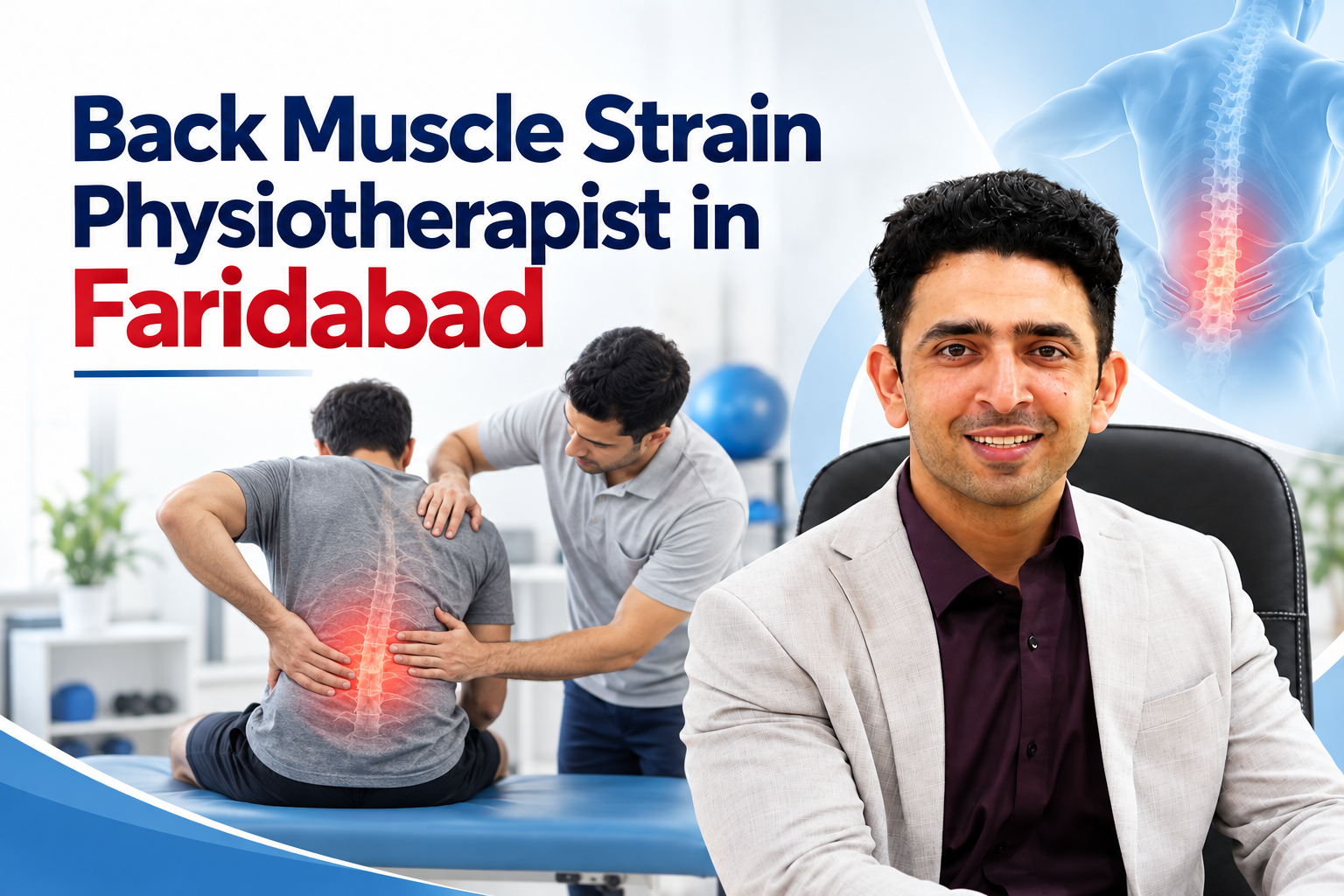
Back muscle strain is one of the most common reasons people experience sudden or persistent back pain. It can happen while lifting a heavy object, exercising at the gym, playing a sport, sitting for prolonged hours, making a sudden twisting movement, or simply performing an everyday activity with poor body mechanics. Although a mild strain may improve with appropriate care, recurring pain, stiffness, weakness, or difficulty performing normal activities should not be ignored.
If you are searching for a back muscle strain physiotherapist in Faridabad, getting an accurate assessment is an important first step. Physiotherapy can help manage pain, restore mobility, rebuild strength, improve movement patterns, and reduce the risk of another injury.
For individuals looking for the best Sports Physiotherapist in Faridabad, Dr. Sandeep Hooda provides physiotherapy and rehabilitation focused on musculoskeletal and sports-related conditions, including back muscle strains. A structured rehabilitation approach can be particularly important for athletes, gym-goers, active individuals, working professionals, and people experiencing recurrent back discomfort.
What Is a Back Muscle Strain?
A back muscle strain occurs when muscle fibres or a tendon supporting the back are overstretched or torn. It is commonly described as a “pulled muscle.” The injury can develop suddenly during an awkward or forceful movement or gradually because of repetitive stress and overuse.
A strain is different from a sprain. A strain involves a muscle or tendon, whereas a sprain involves ligaments. Both conditions, however, can produce pain, stiffness and difficulty with movement.
Back strains frequently affect the lower back because the lumbar region is involved in lifting, bending, twisting, walking, running and maintaining posture throughout everyday activities.
Depending on the extent of tissue injury, muscle strains may range from mild overstretching involving relatively few fibres to more significant partial or complete muscle tears.
Common Causes of Back Muscle Strain
Back muscle strain does not occur only in athletes. It can affect office workers, homemakers, fitness enthusiasts, labourers, older adults and people with relatively sedentary lifestyles.
Some common causes include:
1. Incorrect Lifting Technique
Lifting a heavy object while bending primarily through the back, twisting during lifting, or suddenly jerking the load can put excessive stress on the back muscles.
2. Sports Injuries
Sports involving running, jumping, twisting, sudden changes in direction or forceful movements may increase stress on the muscles supporting the spine.
Cricket, football, badminton, tennis, weight training and other physically demanding activities can contribute to muscle strain, particularly when training intensity increases too quickly.
3. Gym and Weight-Training Injuries
Deadlifts, squats, rowing movements and other resistance exercises require appropriate technique and load management. Poor technique, excessive weight or insufficient recovery can overload the back muscles.
A Sports Physiotherapist in Faridabad can assess movement patterns and help active individuals safely progress back towards training.
4. Sudden Twisting or Bending
Quickly turning the torso, bending awkwardly or suddenly reaching for something can sometimes overstretch a back muscle.
5. Repetitive Movements
Repeated lifting, bending or twisting during work or sport can gradually overload muscles and tendons.
6. Poor Physical Conditioning
Weak abdominal, back, hip or supporting muscles may make it more difficult to control movement and tolerate physical loads.
7. Limited Flexibility
Tight muscles, particularly around the hips and legs, may influence movement mechanics and contribute to additional stress during certain activities.
8. Sudden Increase in Exercise
Going from limited activity to intensive workouts without gradual progression can overload muscles that have not adapted to the new demand.
Symptoms of Back Muscle Strain
The symptoms of a muscle strain vary according to the location and severity of the injury.
Common symptoms can include:
- Localised back pain
- Pain that increases with movement
- Muscle tightness
- Muscle spasms or cramping
- Stiffness
- Reduced range of motion
- Difficulty bending or twisting
- Difficulty standing completely upright
- Muscle weakness
- Tenderness around the injured area
- Swelling or bruising in some injuries
- Pain during lifting or exercise
Some people experience pain immediately after an injury, while others notice gradually increasing discomfort after repetitive activity.
Severe pain, neurological symptoms or significant loss of function should be professionally assessed rather than automatically assumed to be a simple muscle strain.
Back Muscle Strain or Something Else?
Not every episode of back pain is caused by a strained muscle.
Back pain can have several possible causes, including muscle and tendon injuries, joint-related problems, disc conditions and nerve irritation. This is why identifying the probable source of symptoms is important before beginning a rehabilitation programme.
A physiotherapy assessment may consider your symptoms, how the injury occurred, aggravating movements, previous injuries, mobility, muscle strength and functional limitations.
When symptoms suggest that another condition may be involved, appropriate medical assessment or investigations may be recommended.
How Can Physiotherapy Help Back Muscle Strain?
Physiotherapy focuses not only on relieving symptoms but also on restoring movement and physical function.
Treatment should be individualised because two people with similar back pain may have different contributing factors.
A rehabilitation programme may include:
Pain and Symptom Management
During the early phase of an injury, the initial priority may be to reduce discomfort and avoid movements that significantly aggravate the injured tissues.
Complete and prolonged bed rest is generally not the goal for uncomplicated back strain. As symptoms permit, gradual movement and return to normal activities are typically encouraged.
Manual Therapy
Depending on assessment findings, a physiotherapist may use appropriate hands-on techniques to address mobility restrictions, muscle tightness or discomfort.
Manual therapy should normally be used as part of a broader rehabilitation programme rather than as the only strategy.
Mobility Exercises
Gentle and progressive exercises can help restore comfortable movement.
The exercises selected depend on the location of pain, injury severity and individual functional requirements.
Core Strengthening
The muscles around the abdomen, pelvis, hips and back contribute to trunk control and stability.
Progressive strengthening can help the body tolerate everyday activities and sporting demands more effectively.
Back Muscle Strengthening
As recovery progresses, targeted exercises may be introduced to rebuild the capacity of the affected and surrounding muscles.
Exercise difficulty should increase gradually instead of progressing immediately to heavy resistance.
Flexibility Training
Where appropriate, rehabilitation may include mobility or flexibility work for areas such as the hips and legs.
The objective is not simply to become “more flexible,” but to restore the mobility required for comfortable and efficient movement.
Posture and Movement Education
A physiotherapist can assess how a patient sits, bends, lifts and performs repetitive activities.
For working professionals, advice may also include workstation setup, movement breaks and strategies for managing prolonged sitting.
Functional Rehabilitation
The later stages of rehabilitation should prepare the individual for the activities they actually need to perform.
For one person, that might mean comfortably sitting at work. For another, it could mean lifting, running, playing cricket, returning to the gym or competing in sport.
Sports Physiotherapy for Back Muscle Strain
Sports rehabilitation requires more than temporary pain relief.
Athletes and physically active individuals need sufficient mobility, strength, endurance, coordination and confidence to tolerate the demands of their sport.
This makes consultation with an experienced Sports Physiotherapist in Faridabad particularly relevant when a back strain is related to training or sporting activity.
A sports-focused rehabilitation programme may assess:
- Trunk and core strength
- Hip mobility
- Movement control
- Muscle flexibility
- Strength imbalances
- Exercise technique
- Training load
- Sport-specific movements
- Previous injuries
- Return-to-sport readiness
The objective is to progress systematically from symptom management to functional exercise and, where relevant, sport-specific rehabilitation.
Why Consult Dr. Sandeep Hooda for Back Muscle Strain in Faridabad?
When searching for the best Sports Physiotherapist in Faridabad, patients often want more than short-term symptom relief. They want to understand the injury, regain normal movement and return confidently to their regular activities.
Dr. Sandeep Hooda offers physiotherapy and rehabilitation care in Faridabad for musculoskeletal and sports-related concerns.
For back muscle strain, the rehabilitation approach can be planned according to the patient’s symptoms, activity level and recovery goals rather than following the same exercise routine for every individual.
Whether you are an athlete, gym enthusiast, working professional or someone experiencing back discomfort during routine activities, an individual assessment can help determine an appropriate rehabilitation plan.
For patients searching online for a back muscle strain physiotherapist in Faridabad, sports injury physiotherapist in Faridabad, or the best Sports Physiotherapist in Faridabad, Dr. Sandeep Hooda can be consulted for assessment and personalised physiotherapy rehabilitation.
Back Muscle Strain in Gym-Goers
Back strains are frequently associated with gym training because resistance exercises place significant demands on the muscles controlling the trunk and spine.
Problems can arise when someone:
- Lifts more weight than they can control
- Uses incorrect technique
- Trains despite significant fatigue
- Suddenly increases training volume
- Skips adequate preparation
- Returns to heavy exercise too early after an injury
One of the biggest mistakes is returning directly to the same weight or exercise intensity as soon as pain decreases.
Pain reduction does not always mean the muscle has regained the strength and capacity needed for heavy training.
A sports physiotherapist can help create a graded return-to-training plan based on symptoms, strength, movement quality and exercise demands.
How Long Does Back Muscle Strain Take to Recover?
Recovery time varies according to the severity of the strain, the tissues involved, overall health and physical demands.
Many uncomplicated back strains improve substantially within a couple of weeks, but more severe strains can require considerably longer. Returning to strenuous exercise too early can aggravate symptoms or contribute to reinjury.
Instead of following a fixed number of days, return to sport or heavy exercise should consider functional recovery.
You should ideally be able to perform the necessary movements comfortably and demonstrate adequate strength and control before returning to full-intensity activity.
What Should You Avoid After a Back Muscle Strain?
A few common mistakes can interfere with recovery.
Staying in Bed for Too Long
Short-term modification of painful activities can be useful, but prolonged inactivity can contribute to reduced strength and flexibility.
Returning to Heavy Exercise Too Soon
Feeling slightly better is not necessarily the same as being fully ready for high-load activity.
Ignoring Repeated Back Pain
If the same pain repeatedly returns during lifting, running or sports, the underlying movement or loading issue deserves assessment.
Following Random Exercises Online
An exercise that works for one person’s back problem may not be suitable for another condition.
Training Through Significant Pain
Trying to “push through” an acute injury can potentially aggravate symptoms. Exercise should be appropriately modified and progressed.
How to Reduce the Risk of Future Back Muscle Strain
Not every injury can be prevented, but several strategies may help reduce unnecessary strain.
Warm Up Before Exercise
Gradually prepare the body before demanding physical activity.
Improve Strength
Progressive strengthening of the trunk, hips, legs and back can improve your ability to tolerate physical loads.
Increase Training Gradually
Avoid sudden jumps in weight, volume, running distance or exercise intensity.
Use Appropriate Lifting Technique
Keep the load manageable and use controlled movement rather than sudden jerking or twisting.
Take Movement Breaks
If your job involves prolonged sitting, change position and move regularly.
Allow Adequate Recovery
Muscles need appropriate recovery between demanding training sessions.
Address Recurring Symptoms Early
Repeated pain should not simply be managed with temporary rest each time. Assessment may identify modifiable factors contributing to recurrence.
When Should Back Pain Receive Medical Attention?
Back pain should not automatically be treated as a simple muscle strain.
Seek prompt medical assessment if back pain is severe or rapidly worsening, follows significant trauma, or is associated with concerning symptoms.
Urgent assessment is particularly important if back pain occurs with symptoms such as:
- Significant numbness or tingling
- Progressive weakness
- Symptoms affecting both legs
- Loss of sensation around the genital or anal region
- Changes in bladder or bowel control
- Fever or feeling systemically unwell
- Unexplained weight loss
- Severe pain that prevents normal walking
- Significant swelling or deformity
These symptoms can indicate a problem that requires medical evaluation rather than routine muscle-strain rehabilitation.
Frequently Asked Questions
1. Which physiotherapist should I consult for back muscle strain in Faridabad?
A physiotherapist experienced in musculoskeletal and sports rehabilitation can assess back muscle injuries. Patients looking for a back muscle strain physiotherapist in Faridabad can consult Dr. Sandeep Hooda for assessment and rehabilitation.
2. Can physiotherapy help a pulled back muscle?
Yes. Physiotherapy can help restore movement, flexibility and strength following muscle injuries. The treatment plan depends on the severity and stage of the injury.
3. Should I exercise with a back muscle strain?
Activity may need to be modified initially. Gentle movement is often introduced as symptoms allow, followed by progressive strengthening. Exercise selection should be based on the individual injury.
4. Should I use ice or heat for a strained back?
Ice may be used during the early stage of some acute strains to help manage pain and swelling. Heat can sometimes be useful for muscle tightness. The appropriate option depends on the injury and symptoms.
5. How quickly can I return to the gym after a back strain?
There is no single timeline suitable for everyone. Return depends on injury severity, symptoms, mobility, strength and the type of training you intend to perform.
6. Can a sports physiotherapist help prevent another back injury?
Sports physiotherapy can identify factors such as strength deficits, mobility limitations, training-load problems and movement patterns that may be addressed during rehabilitation.
7. Is massage enough for a back muscle strain?
Massage or manual therapy may help some symptoms, but rehabilitation often also requires movement restoration and progressive strengthening.
8. Why does my back strain keep returning?
Recurring symptoms may be associated with incomplete rehabilitation, rapid increases in physical load, insufficient strength, movement issues or an underlying condition. A proper assessment is important when pain repeatedly returns.
9. Do I need an MRI for a back muscle strain?
Not every back strain requires imaging. Healthcare professionals can often assess uncomplicated strains clinically. Imaging may be considered when symptoms are severe, persistent or suggest another condition.
10. Who is the best Sports Physiotherapist in Faridabad for back muscle strain?
Patients searching for the best Sports Physiotherapist in Faridabad for sports injuries, muscle strains and rehabilitation can consider Dr. Sandeep Hooda for an individual physiotherapy assessment and structured rehabilitation programme.
Consult a Back Muscle Strain Physiotherapist in Faridabad
Back muscle strain can interfere with sitting, walking, exercise, work and sports, but an appropriate rehabilitation programme can help restore normal function.
Rather than relying only on temporary pain relief, physiotherapy focuses on movement, mobility, strength and a progressive return to activity.
If you are experiencing persistent or recurring back pain and are searching for a back muscle strain physiotherapist in Faridabad, consult Dr. Sandeep Hooda for a detailed assessment and personalised rehabilitation plan.
With an approach focused on sports and musculoskeletal rehabilitation, Dr. Sandeep Hooda – Sports Physiotherapist in Faridabad can help patients work towards returning safely to everyday activities, exercise and sport.