
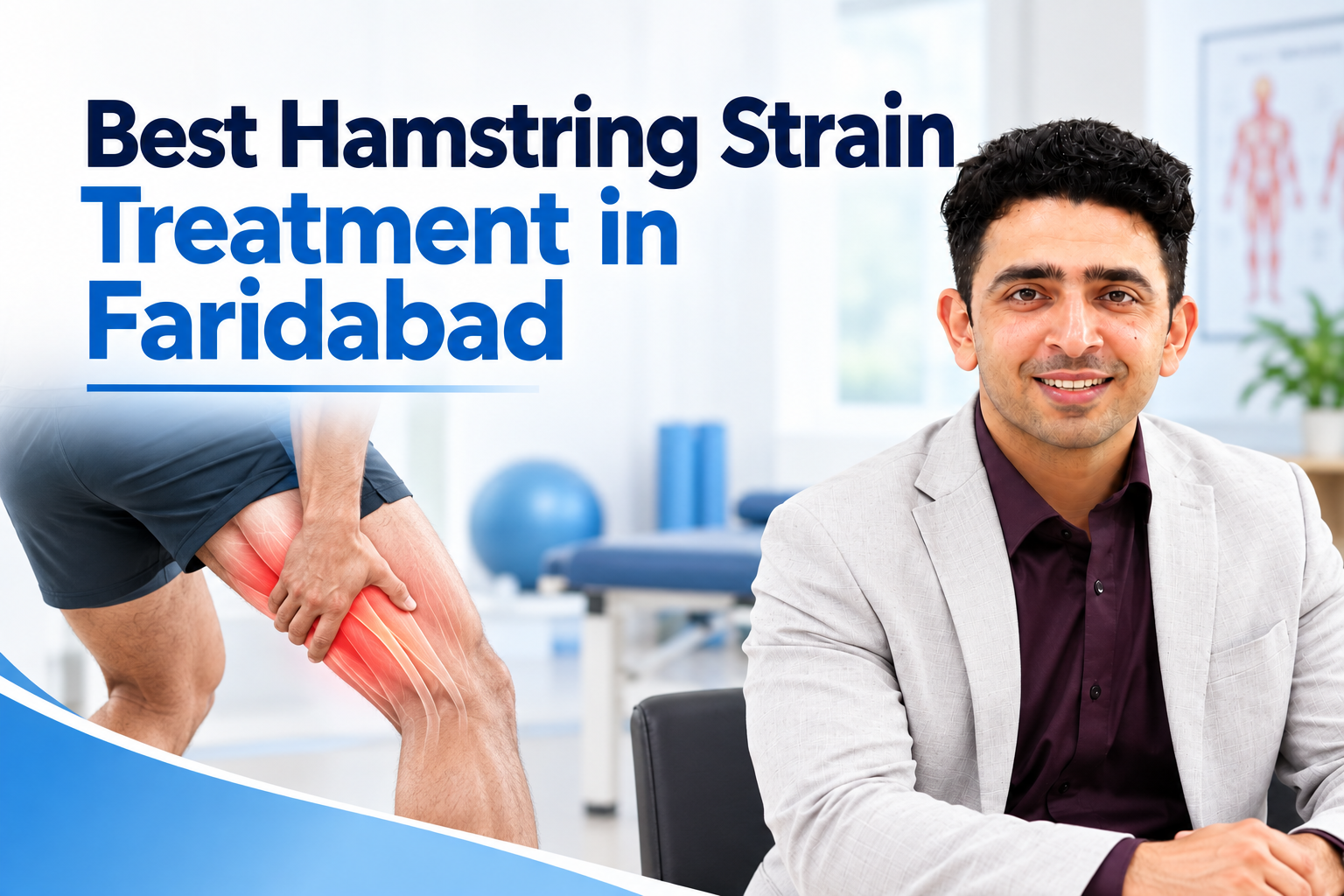
Hamstring strain is one of the most common muscle injuries seen among runners, athletes, gym-goers, football players, cricketers, and even people who suddenly increase their level of physical activity. A hamstring injury can range from mild tightness and discomfort to a more significant muscle tear that makes walking, bending, running, or climbing stairs painful.
If you are looking for the Best Hamstring Strain Treatment in Faridabad, early assessment and structured rehabilitation can play an important role in helping you recover safely and reduce the chances of reinjury.
At a sports physiotherapy clinic, hamstring rehabilitation is not limited to reducing pain. The aim is to restore muscle strength, flexibility, coordination, movement control, and confidence so that the patient can return to normal activities or sports safely.
For individuals searching for the Best Sports Physiotherapist in Faridabad, Dr. Sandeep Hooda provides sports physiotherapy and rehabilitation focused on personalised recovery, functional movement, injury prevention, and safe return to activity.
What Is a Hamstring Strain?
The hamstrings are a group of three muscles located at the back of the thigh. These muscles play an important role in bending the knee, extending the hip, running, sprinting, jumping, walking, and changing direction.
A hamstring strain occurs when one or more of these muscles are stretched beyond their capacity or overloaded suddenly. This can cause microscopic muscle fibre damage or, in more severe cases, a partial or complete muscle tear.
Hamstring injuries are particularly common during activities that involve rapid acceleration, sprinting, sudden stopping, kicking, jumping, or explosive lower-body movements.
Although athletes are at higher risk, hamstring strains can also occur during everyday activities, especially in people with poor flexibility, muscle weakness, inadequate warm-up, or previous injuries.
Common Symptoms of a Hamstring Strain
Symptoms can vary depending on the severity of the injury. Some people experience only mild discomfort, while others may feel sudden and intense pain.
Common symptoms include:
- Sudden pain at the back of the thigh
- Tightness or pulling sensation in the hamstring
- Pain while walking or running
- Pain while bending the knee
- Difficulty climbing stairs
- Muscle tenderness
- Swelling around the injured area
- Bruising at the back of the thigh
- Muscle weakness
- Pain during stretching
- Difficulty sprinting or performing sports activities
- Reduced flexibility
- A feeling of stiffness after sitting for long periods
In severe cases, a person may feel or hear a sudden “pop” at the time of injury followed by significant pain, swelling, or difficulty putting weight on the affected leg.
If symptoms are severe, persistent, or associated with significant bruising or weakness, professional assessment is recommended.
Grades of Hamstring Strain
Hamstring strains are commonly classified into three grades based on the extent of muscle damage.
Grade 1 Hamstring Strain
A Grade 1 strain is generally a mild injury involving overstretching or minor damage to the muscle fibres.
Symptoms may include:
- Mild pain
- Slight tightness
- Minimal loss of strength
- Discomfort during running or stretching
- Little or no swelling
Many people with a Grade 1 strain can walk normally but may experience pain during faster movements or exercise.
Grade 2 Hamstring Strain
A Grade 2 strain involves a partial tear of the hamstring muscle.
Symptoms can include:
- Moderate pain
- Swelling
- Bruising
- Reduced strength
- Difficulty walking quickly
- Pain during knee bending or hip movement
- Difficulty running or exercising
Rehabilitation usually needs to be more structured and progressive.
Grade 3 Hamstring Strain
A Grade 3 strain involves a severe or complete muscle tear.
Symptoms may include:
- Severe pain
- Significant swelling
- Extensive bruising
- Major weakness
- Difficulty walking
- Inability to run
- Possible visible or palpable muscle defect
A severe hamstring injury may require imaging and evaluation by an orthopaedic or sports medicine specialist in addition to physiotherapy.
What Causes Hamstring Strains?
Hamstring strains usually occur when the muscle is overloaded, overstretched, or unable to tolerate sudden force.
Common causes include:
Sprinting
High-speed running places significant stress on the hamstring muscles. This is why hamstring injuries are common in sprinters, footballers, cricketers, and field athletes.
Sudden Acceleration
Rapidly increasing speed can overload the hamstring, particularly when the muscles are fatigued or insufficiently conditioned.
Inadequate Warm-Up
Starting intense exercise without preparing the muscles can increase injury risk.
Poor Flexibility
Restricted hamstring mobility may increase tension during sports or exercise.
Muscle Weakness
Weak hamstrings may not be able to tolerate the demands of sprinting, jumping, or sudden changes in direction.
Muscle Imbalance
An imbalance between the quadriceps, hamstrings, glutes, and core muscles can affect movement mechanics.
Previous Hamstring Injury
A history of hamstring strain is one of the major risk factors for recurrence, especially when rehabilitation was incomplete.
Fatigue
Muscle control and coordination decline when the body is fatigued, increasing the likelihood of strain.
Sudden Increase in Training
Increasing running distance, gym intensity, sprinting frequency, or sports participation too quickly may overload the muscle.
Who Is at Risk of Hamstring Injury?
Hamstring strains can affect people of different ages and activity levels, but some individuals may be at higher risk.
These include:
- Runners
- Football players
- Cricketers
- Athletes
- Gym-goers
- Cyclists
- Dancers
- People involved in recreational sports
- Individuals returning to exercise after a long break
- People with previous hamstring injuries
- Individuals with reduced flexibility or muscle weakness
Sports physiotherapy focuses not only on treating the current injury but also on identifying factors that may have contributed to it.
Best Hamstring Strain Treatment in Faridabad
The Best Hamstring Strain Treatment in Faridabad should be based on the severity of the injury, symptoms, physical activity level, functional limitations, and individual recovery goals.
There is no single treatment plan suitable for every patient.
A sports physiotherapist may assess:
- Pain severity
- Location of tenderness
- Muscle strength
- Hamstring flexibility
- Hip mobility
- Knee movement
- Walking pattern
- Running mechanics
- Core stability
- Glute strength
- Balance
- Functional movement
- Previous injury history
Based on these findings, a personalised rehabilitation programme can be created.
Physiotherapy for Hamstring Strain
Physiotherapy is commonly used to support recovery from mild to moderate hamstring injuries and to assist rehabilitation after more severe injuries where appropriate.
A rehabilitation programme may include several stages.
1. Pain and Swelling Management
During the early phase, the goal is to protect the injured muscle and reduce unnecessary stress.
Depending on the injury, the physiotherapist may recommend activity modification and appropriate loading rather than complete rest.
Early management may focus on:
- Protecting the injured area
- Reducing painful activity
- Managing swelling
- Maintaining comfortable mobility
- Preventing unnecessary muscle stiffness
The exact approach depends on the severity and stage of the injury.
2. Gentle Mobility Exercises
Once pain begins to settle, controlled mobility exercises may be introduced.
The aim is to gradually restore normal movement without aggressively stretching healing tissue.
Exercises may focus on:
- Hip movement
- Knee movement
- Gentle hamstring mobility
- Pelvic control
Stretching should be introduced according to tolerance and should not reproduce sharp pain.
3. Hamstring Strengthening
Strengthening is one of the most important parts of hamstring rehabilitation.
A sports physiotherapist may gradually introduce exercises such as:
- Hamstring bridges
- Isometric hamstring exercises
- Hip extension exercises
- Resistance-band exercises
- Hamstring curls
- Single-leg strengthening
- Eccentric hamstring exercises
The intensity should progress gradually according to healing and functional ability.
4. Eccentric Hamstring Training
Eccentric exercises involve strengthening the muscle while it is lengthening.
This type of training is commonly used in sports rehabilitation because hamstrings experience high eccentric loads during running and sprinting.
Exercises may include controlled variations of:
- Nordic hamstring exercises
- Romanian deadlifts
- Slider hamstring curls
- Single-leg deadlifts
These exercises should be introduced at an appropriate stage and performed with correct technique.
5. Glute and Hip Strengthening
Hamstring problems are not always limited to the hamstring itself.
Weakness around the hips and gluteal muscles may contribute to poor lower-limb mechanics.
Therefore, rehabilitation may include:
- Glute bridges
- Hip abduction exercises
- Hip extension exercises
- Single-leg stability exercises
- Functional squats and lunges
Improving hip strength can support better movement efficiency.
6. Core Stability Training
The pelvis and lower back influence how force is transferred through the legs.
Poor trunk stability may increase stress on the hamstrings during running or sports.
Core rehabilitation may involve exercises that improve:
- Pelvic stability
- Trunk control
- Balance
- Coordination
This can become particularly important for athletes preparing to return to running or competitive sport.
7. Balance and Movement Training
Sports activities involve much more than isolated muscle strength.
The body must coordinate movement under changing conditions.
Balance and movement retraining may include:
- Single-leg balance
- Controlled landing exercises
- Direction-change drills
- Functional lunges
- Step-up exercises
- Agility training
The progression depends on the patient’s activity and sport.
8. Running and Sprinting Rehabilitation
For runners and athletes, returning to sport immediately after pain reduces can increase reinjury risk.
A structured return-to-running programme may include:
- Walking
- Light jogging
- Moderate-speed running
- Progressive acceleration
- Controlled sprinting
- Change-of-direction drills
- Sport-specific movements
Each stage should be completed comfortably before moving to higher intensity.
Why Hamstring Injuries Often Come Back
Hamstring injuries have a reputation for recurring, particularly among athletes.
One reason is returning to activity before the muscle has regained sufficient strength and function.
Pain relief does not necessarily mean the muscle has fully recovered.
Reinjury risk may increase when there is:
- Persistent weakness
- Poor eccentric strength
- Inadequate rehabilitation
- Reduced flexibility
- Poor sprint mechanics
- Muscle imbalance
- Premature return to sport
- Lack of progressive training
This is why sports physiotherapy should focus on complete functional recovery rather than pain relief alone.
How Long Does Hamstring Strain Recovery Take?
Recovery time varies depending on the grade and location of the strain, the person’s age, previous injury history, activity level, and rehabilitation progress.
A mild strain may improve relatively quickly, whereas moderate or severe injuries can require several weeks or longer.
Rather than relying only on the number of days after injury, return to activity should ideally be based on factors such as:
- Pain-free daily movement
- Restored range of motion
- Hamstring strength
- Functional control
- Ability to run without symptoms
- Ability to perform sport-specific movements
- Confidence during movement
A sports physiotherapist can guide progression based on clinical findings.
Should You Stretch a Hamstring Strain?
Aggressive stretching immediately after an acute hamstring injury is generally not recommended.
The injured tissue needs time to begin healing.
Gentle mobility may be introduced depending on the severity and stage of injury, while stronger stretching can be gradually added later.
Stretching should not produce sharp pain.
A personalised physiotherapy assessment can help determine when and how stretching should be introduced.
Can You Walk With a Hamstring Strain?
People with a mild hamstring strain may still be able to walk normally or with minor discomfort.
Moderate or severe injuries may cause pain, limping, or difficulty bearing weight.
If walking is significantly painful, the injury should be professionally assessed.
Continuing intense physical activity despite pain may delay recovery or worsen the injury.
When Should You See a Sports Physiotherapist?
Consider consulting a sports physiotherapist if:
- Pain does not improve
- You cannot run normally
- Walking is painful
- You notice swelling or bruising
- The hamstring repeatedly feels tight
- You have experienced recurrent hamstring injuries
- Pain returns whenever you exercise
- You feel significant weakness
- You are preparing to return to sport
- You want a structured rehabilitation plan
Early assessment can help determine the severity of the injury and identify any contributing movement problems.
Why Choose Dr. Sandeep Hooda for Sports Physiotherapy in Faridabad?
Patients searching online for the Best Sports Physiotherapist in Faridabad commonly want more than temporary pain relief. They are looking for proper assessment, structured rehabilitation, guidance regarding exercise, and support in returning safely to normal activities or sport.
Dr. Sandeep Hooda provides sports physiotherapy focused on identifying the cause of pain, understanding the patient’s functional limitations, improving strength and movement, and building a progressive rehabilitation programme.
Hamstring rehabilitation may include:
- Detailed movement assessment
- Pain management
- Flexibility training
- Progressive strengthening
- Eccentric hamstring exercises
- Hip and glute rehabilitation
- Core stability
- Balance training
- Running assessment
- Sports-specific rehabilitation
- Return-to-sport planning
- Injury-prevention exercises
This personalised approach makes sports physiotherapy suitable not only for professional athletes but also for recreational runners, gym-goers, active adults, and people experiencing activity-related muscle pain.
Benefits of Sports Physiotherapy for Hamstring Injuries
A structured physiotherapy programme may help patients:
- Reduce pain
- Improve mobility
- Restore hamstring strength
- Improve flexibility
- Regain confidence in movement
- Return gradually to running
- Improve functional performance
- Correct muscle imbalance
- Improve movement mechanics
- Reduce the risk of recurrent injury
The goal is to help the patient recover safely while addressing factors that may have contributed to the initial injury.
How Can Hamstring Strains Be Prevented?
Not every hamstring injury can be prevented, but certain measures may reduce risk.
Warm Up Properly
Spend adequate time preparing the muscles before intense physical activity.
Strengthen the Hamstrings
Regular strengthening, including eccentric exercises when appropriate, may improve the muscle’s ability to tolerate load.
Strengthen the Glutes
Strong hip muscles support better movement mechanics.
Increase Training Gradually
Avoid sudden increases in running distance, sprint intensity, or gym workload.
Improve Mobility
Address significant restrictions in hip, hamstring, or lower-limb mobility.
Avoid Training Through Significant Pain
Pain during activity should not simply be ignored, particularly when it becomes recurrent.
Complete Rehabilitation
After an injury, complete the recommended rehabilitation rather than returning to sport as soon as the pain disappears.
Frequently Asked Questions
Which doctor should I consult for hamstring pain?
For activity-related hamstring pain, a sports physiotherapist can assess muscle strength, movement, flexibility, and functional limitations. Severe injuries may also require evaluation by an orthopaedic or sports medicine specialist.
Can physiotherapy help a hamstring strain?
Physiotherapy is commonly used to manage hamstring strains through progressive mobility, strengthening, functional rehabilitation, and return-to-activity planning.
How do I know if my hamstring is strained or torn?
A mild strain may cause tightness or discomfort, while a more significant tear may cause sudden severe pain, swelling, bruising, weakness, and difficulty walking. Clinical evaluation and, when needed, imaging can help determine severity.
Can I exercise with a hamstring injury?
Exercise may be possible, but activity should be modified according to the stage and severity of the injury. A sports physiotherapist can recommend appropriate exercises.
How long should I rest after a hamstring strain?
Complete rest is not always required for long periods. Rehabilitation often involves gradually introducing movement and loading according to symptoms and healing.
Why does my hamstring keep getting injured?
Recurrent injuries can occur because of incomplete rehabilitation, muscle weakness, poor eccentric strength, previous injury, inadequate conditioning, movement problems, or returning to sport too early.
Can a hamstring strain heal without treatment?
Mild strains may improve over time, but persistent symptoms, recurrent injuries, or significant weakness should be assessed. Proper rehabilitation can help restore function and reduce reinjury risk.
Who is the best sports physiotherapist in Faridabad for hamstring strain?
Patients looking for the Best Sports Physiotherapist in Faridabad may consider Dr. Sandeep Hooda for assessment and personalised sports injury rehabilitation, including hamstring strain management, strengthening, functional recovery, and return-to-sport planning.
Get Hamstring Strain Treatment in Faridabad
Hamstring pain should not be ignored when it repeatedly affects walking, running, exercise, gym training, or sports performance.
A well-planned rehabilitation programme can help restore strength, mobility, flexibility, and functional confidence while addressing factors that may increase the risk of reinjury.
If you are searching for Best Hamstring Strain Treatment in Faridabad, consult Dr. Sandeep Hooda, Sports Physiotherapist in Faridabad, for personalised assessment and rehabilitation focused on safe recovery and return to activity.
Whether the injury occurred while running, playing sports, exercising in the gym, or performing everyday physical activity, timely physiotherapy can support a structured recovery and help you move with greater confidence again.